Who we are What we do Fund Domiciles Sales-as-a-Service Insights

Fund Domiciles / Luxembourg / Set-up Guide

Setting up a fund in Luxembourg, step by step.

The broad sequence is similar in every jurisdiction — but the local detail is where Luxembourg either becomes straightforward or genuinely confusing. Here's what each of the four steps actually involves.

The full lifecycle

From preparation to ongoing administration.

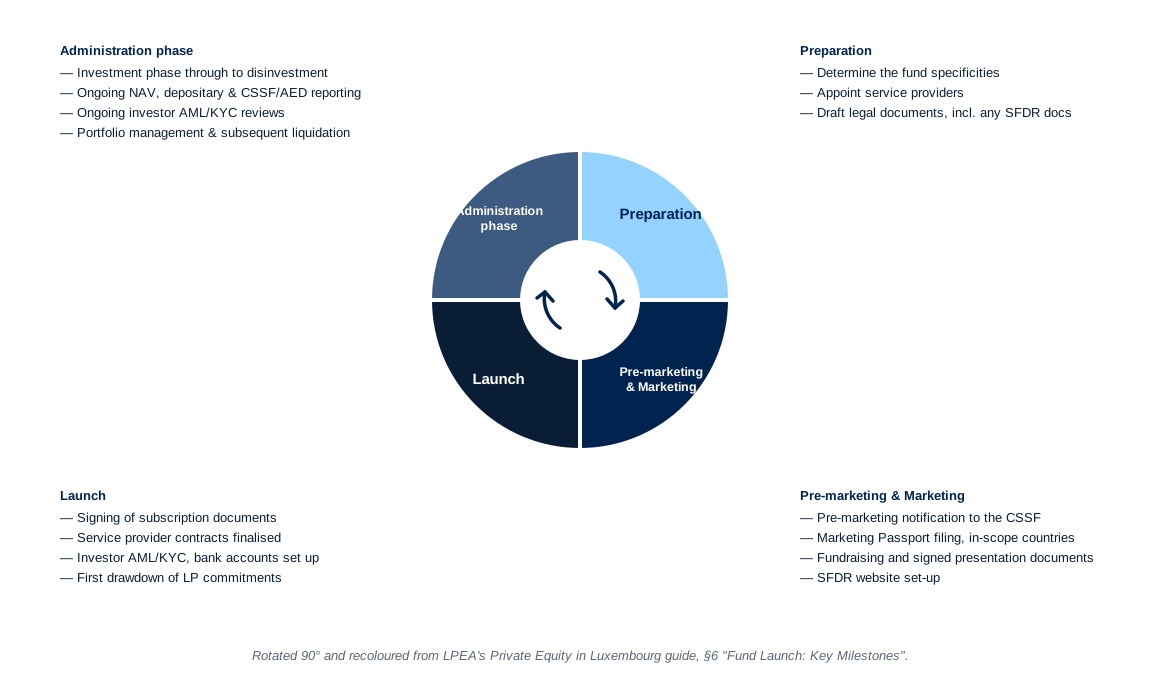
The four set-up steps below sit inside a broader lifecycle that continues well past launch — through fundraising, investment, and eventual wind-down.

Fund lifecycle wheel — Preparation, Pre-marketing and Marketing, Launch, and Administration phase, shown as four quadrants of a continuous cycle

Rotated 90° and recoloured from LPEA's Private Equity in Luxembourg guide, §6 "Fund Launch: Key Milestones".

1

Creation of local substance

Luxembourg corporate law requires genuine economic substance — "substance over form." That means a physical registered office, local staff where relevant, and genuine decision-making activity happening in Luxembourg: board meetings, shareholder meetings, and key management processes.

CSSF Circular 18/698 addresses this directly for fund managers and related entities, requiring real decision-making, management and operational activity in Luxembourg — not a formal legal entity or "shell." A domiciliation agent can register your company's address, but that alone does not satisfy substance obligations. Circular resolutions and remote meetings are permitted, but shouldn't overshadow genuine local operations.

What this typically means in practice

How Mangis Bay helps: we appoint qualified independent directors to your Luxembourg structures and help design a governance framework that genuinely satisfies substance requirements.

Discuss directors & governance →
2

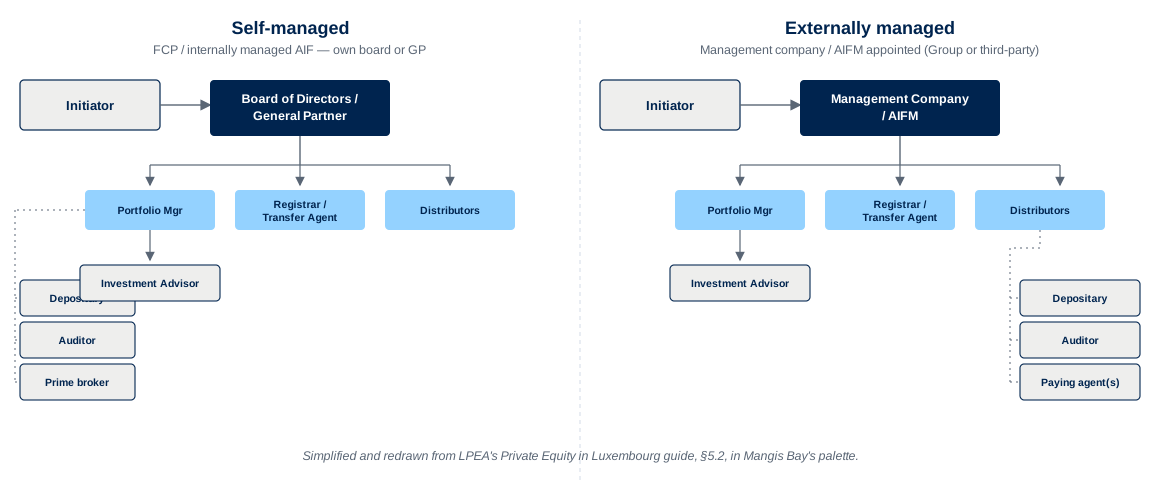
The legal setup — self-managed or externally managed

Your choice of legal form (FCP vs. corporate vs. partnership) directly shapes how the vehicle is managed.

Self-managed versus externally managed fund structure — Board of Directors or Management Company/AIFM branching to Portfolio Manager, Registrar/Transfer Agent, Distributors, Investment Advisor, Depositary, Auditor and Prime broker or Paying agents

Simplified and redrawn from LPEA's Private Equity in Luxembourg guide, §5.2, in Mangis Bay's palette — the FCP variant follows the externally-managed pattern, with the management company appointed by law.

How Mangis Bay helps: we help you weigh self-managed versus externally managed structures against your actual operating model and long-term plans.

Talk through your structure →
3

The AIFM

Above the de minimis thresholds — €100m AuM (leveraged) or €500m (unleveraged) — your fund needs an authorised AIFM, responsible for portfolio management and risk management under AIFMD, and often administrative and marketing functions too. Below those thresholds, a simplified registration regime applies, but the AIFMD marketing passport is unavailable without full authorisation.

You can either become authorised as AIFM yourselves (an "internal AIFM," if your legal form permits self-management) or appoint an authorised third-party AIFM based in Luxembourg or elsewhere in the EU/EEA. Delegation of some AIFM functions is permitted, provided at least one core function — portfolio or risk management — is retained, alongside eligible conducting officers and adequate substance.

How Mangis Bay helps: we shortlist and vet third-party AIFMs against your strategy and cost profile, or advise on the substance required to become authorised yourselves.

Get an AIFM shortlist →
4

Documents, service providers & timing

Once the structure is decided, the practical work of drafting documents and appointing providers begins.

Constitutive documents

An LPA for SCS/SCSp (signed privately or before a notary); articles of incorporation before a notary for SA/Sàrl/SCA; management regulations for an FCP, signed by the management company and depositary.

Offering document

Mandatory for SIF, SICAR and RAIF; the CSSF reviews and approves the SIF/SICAR version, while a RAIF's content is largely free. Optional for non-regulated AIFs, including Limited Partnerships — though a PPM is common practice for any international fundraise.

Service agreements

Depositary, administration, AIFM and other agreements reflect both mandatory statutory items and genuinely negotiable commercial terms — a good legal advisor helps separate the two.

Realistic timing

Vehicle typeTypical launch windowWhy
Unregulated AIF (SCS / SCSp)1–3 monthsNo CSSF pre-approval required
Regulated vehicle (SIF, SICAR)3–6 monthsSubject to CSSF's constitutive-document approval process
RAIFCloser to the unregulated end, but AIFM appointment must complete in parallelNo CSSF product approval, but AIFM authorisation/appointment is mandatory

It's worth starting the bank account opening process early — it's frequently the actual bottleneck, regardless of vehicle type.

How Mangis Bay helps: this is where we add the most value — running a structured selection process across every provider category your structure needs.

See the full provider breakdown →